
The Coldest Winter
Unparalleled beauty

The Germans have a phrase: Wenn schon, denn schon. If you’re going to do something, do it all the way. Go all in. Commit without reservation. It’s a philosophy of totality, of refusing half-measures, of embracing what you’ve chosen with body and soul.
Winter in Interior Alaska doesn’t give you a choice. It usually arrives in October with the first snow and the first ice on streams and lakes. From that moment on, it ratchets up the intensity through the peak of winter until it loosens its grip in April. It simply is—total, uncompromising, absolute. And if you’re going to live here, you learn quickly that wenn schon, denn schon isn’t just a philosophy. It’s the way to not just survive but thrive.
Around Fairbanks, we normally get brief reprieves, a chance to catch our breath with the Chinook winds that blow warmer air across the Alaska Range to our south. As the air descends over the peaks, it compresses and warms, just like the Föhn winds do on the northern side of the Alps in Germany, Switzerland and Austria. But not this winter
This winter, Fairbanks set records. The overall coldest winter since records started being kept in 1904. There were no extremes set, like the all-time record of -66°F, but it was the unrelenting duration of the cold. 152 consecutive days below freezing. 31 days when the thermometer dropped at or below -40°F. 66 days that never climbed above zero. 72 days with my own personal definition of extreme- where temperatures dipped below -20°F. And in Northway, a Native Interior village near the Canadian border, the temperature hit -70°F—a number so extreme it stops feeling like weather and starts feeling like a physical force, like gravity or time. It was also one of the snowiest winters on record with 99 inches overall, leaving 3 feet of snow on the ground by the time break up started. When I was growing up in West Virginia, people would say, “It’s too cold to snow.” That’s a myth. I’ve seen it snow at -32°F.
When I moved to Fairbanks in May 2023, I heard the sourdoughs- the people who have lived here the longest- talk about the changing climate. How winters were not as extreme as they once were. People reminisced about temperatures at -50°F or below for weeks. Things had changed over the decades. More wet snow and even unheard-of rain episodes in winter rather than the customary fluffy, dry powder. Treacherous icy roads were only one aspect of rain events- the ice blocked animals from foraging and blocked air from reaching the ground where animals live. Global warming isn’t an obscure theory here in the Arctic and Subarctic. The Earth is warming four times faster here than anywhere else since 1979. Some climate change-denying friends point to the extreme cold of the winter of 2025-26 in Alaska as proof that global warming is a hoax. The simplest explanation is that our planet is a living organism with self-regulatory mechanisms for many natural phenomena, like climate. When we get sick, we lose our thermoregulation. Mother Earth is the same. We are experiencing fevers and chills. And this winter was a chill, a sure sign of a sickly planet.
This was my third winter here and I finally got the full Alaskan winter experience.
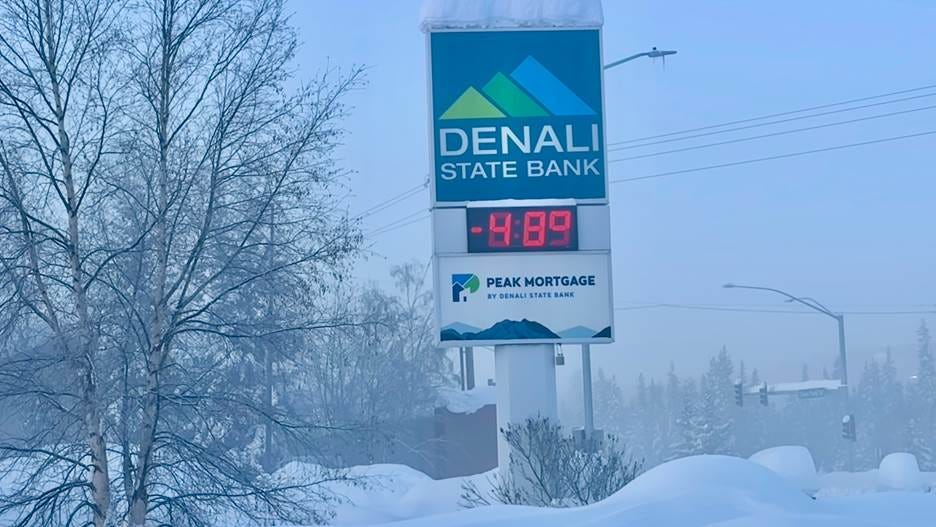
At -40°F, the world changes. It’s not just colder—it’s fundamentally different, operating under different rules. Machines that worked perfectly well at -20°F begin to seize up. Vehicles without electric heaters that keep oil pans, engine blocks and batteries warm refuse to start. The cold kills batteries, their chemical reactions slowing to nothing. Electrical systems flicker and fail. Even filling up the car with gas becomes problematic as the LED displays at the pump become unreadable. When the temperatures dip below -44°F, propane no longer exists as a gas and propane-dependent kitchen burners quit. Tires, pliable at warmer temperatures, become rigid, the flat surface in contact with road after the car sits for a few hours, distorts the round shape, what locals call, “square tires”. People bump along the road for a few miles until the friction warms the tires back into their round shapes. The mechanical world we’ve built, all our technology and infrastructure, reveals itself as fragile, designed for a temperate planet that doesn’t include this kind of cold.
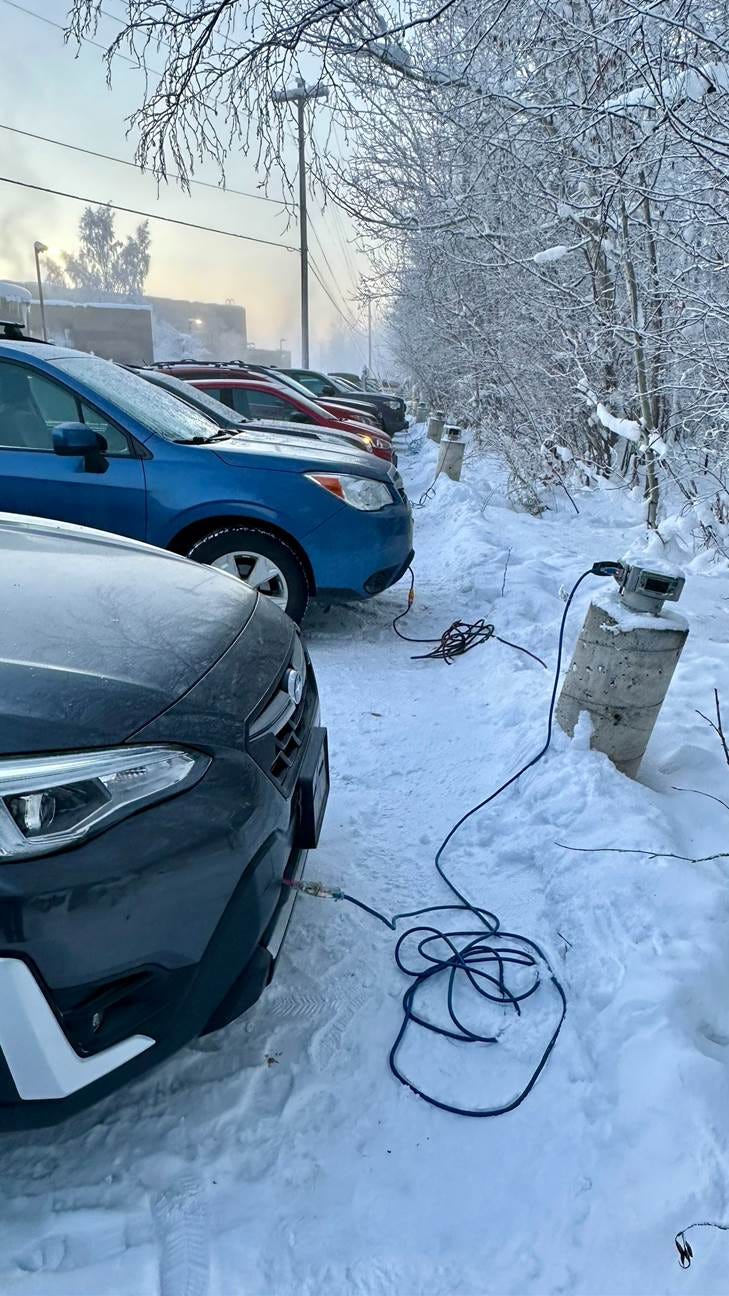
There are strategies that keep the automotive world moving. Vehicles in the Interior have the tell-tale male plugs extending most often through the grill of the car. Most parking lots here have headbolts where you can plug in. People carry blue extension cords to link the car plugs to the outlets, the blue a special insulation plastic that doesn’t become friable under the extreme cold, what a friend calls “blue cobras”. A heated steering wheel is an amazing creature comfort, keeping hands warm before the heaters make the cabin comfortable. I learned that “remote start” isn’t a luxury here; it’s a necessity in parking lots without headbolts, giving the engine time to warm before you ask it to move. And if you don’t have that feature? You just leave the car running. For some people without these basics, it isn’t enough. The cold wins. They stay home.
Driving requires special consideration. Four-wheel drive or all-wheel drive vehicles take the stress out of driving on even the iciest surfaces. Of course, pick-up trucks make up a big part of the vehicles on the road. Many haul diesel or heating fuel to save delivery costs. If you live outside Fairbanks, where they have city water, and you don’t have a well (like we are fortunate to have), you can have water delivered to your indoor cistern or you can save money by hauling it yourself with your pickup. The tires you choose fall into two camps here: Studded winter tires or studless Bridgestone Blizzak tires, which have special rubber to grip better in snow. I’m old school and like the studded tires my father preferred.
In the lower 48, people salt the roads to help melt the snow and ice. At extreme Alaskan temperatures, salt is useless and worse, an environmental hazard. Road crews spread fine rocks, which embed into the hard pack for better traction. I’ve been to both Anchorage and Fairbanks in the winter and of the two, Fairbanks does a superior job clearing roads after snow and preparing not only roads, but sidewalks as well.
Despite your best driving and preparation, nature has a way of throwing curve balls at travelers. A few inches of fresh, powdery snow on the roads is suspended in the air like baby powder to create opaque white clouds that blind drivers, especially when reflected off headlights. You can be perfectly cautious, but a slippery intersection can turn another vehicle into a projectile that smashes into you, automotive plastics shattering like glass at those temperatures. Whether it is an accident, or a driver stuck in a ditch or just a breakdown, you see a different side to the normally reserved Alaskans. People stop to check on you: offering help, making sure you won’t freeze to death. A car in a ditch will often be accompanied by two or three other motorists stopping to lend assistance.
But you can’t always stay home. Life continues, even at -50°F. So you learn to dress for it.
Layers. That’s the first lesson. Not one heavy coat, but multiple thin barriers trapping air between them. Long underwear—silk or merino wool, nothing cotton, which holds moisture and will freeze against your skin. A fleece mid-layer. Then the parka, a serious one with a hood lined with fur or faux fur to create a microclimate around your face. The hood matters more than you’d think. Without it, your breath freezes instantly in the air around you, creating a cloud of ice crystals that clings to your hair, your eyebrows, your scarf.
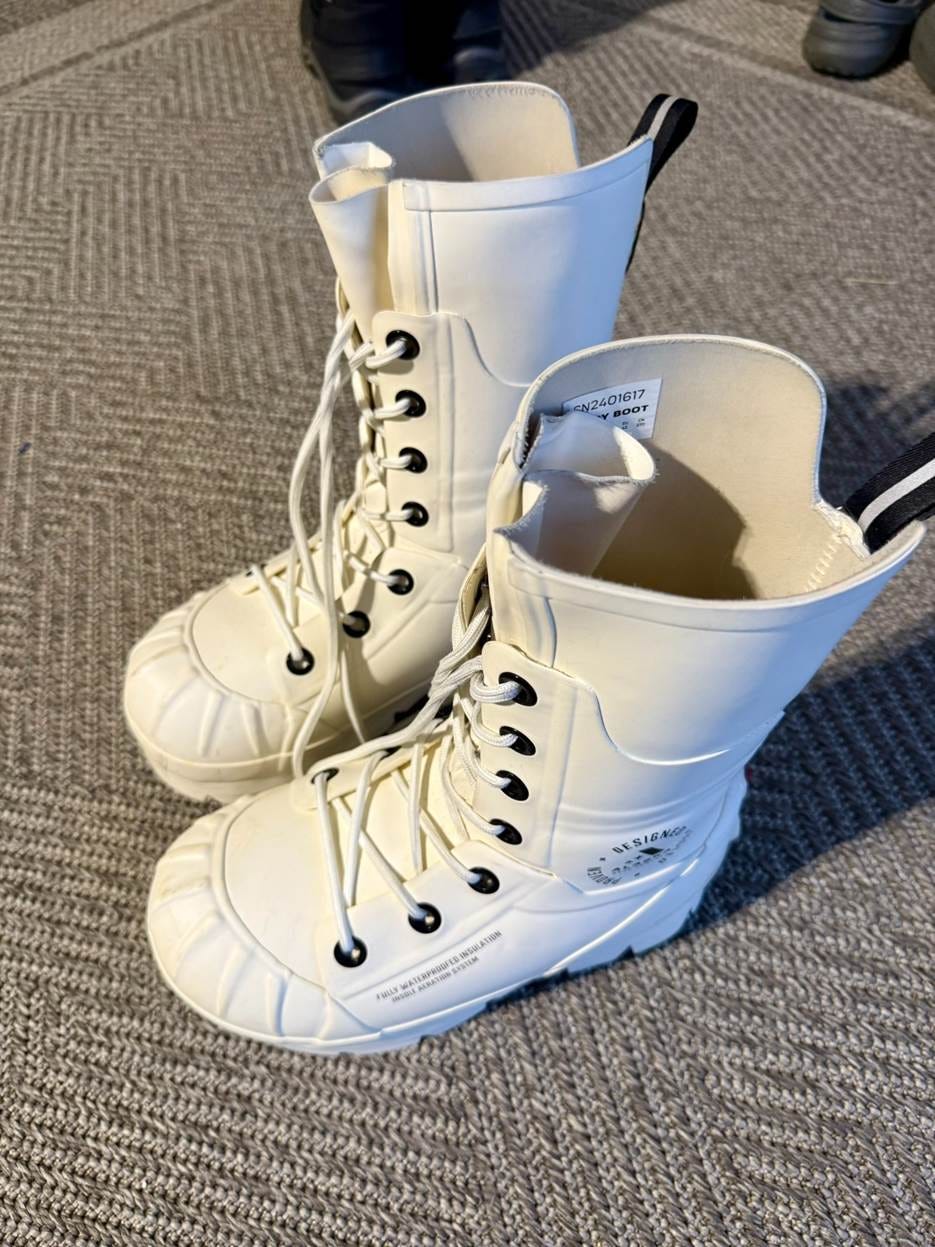
Then there are the boots. Many people have their own formulas for what they like, with different insulating layers. Last winter, I made a great purchase: Alaska Gear Company “bunny boots”. These are modeled after the white rubber military-issue boots designed for the Korean War, rated to -60°F. They’re bulky and ungainly and they make you walk like you’re wearing clown shoes, but they work. Your feet stay warm. That matters when you’re standing outside waiting for a car to start, or walking from a parking lot to a building, or doing any of the hundred small things that require you to be outside in temperatures that can give you frostbite in under five minutes.
And the hat. My preference is a chopper hat—the kind with flaps that come down over your ears and tie under your chin, lined with fur, covering everything but your eyes. You look ridiculous. No one cares. Vanity is a warm-weather luxury.
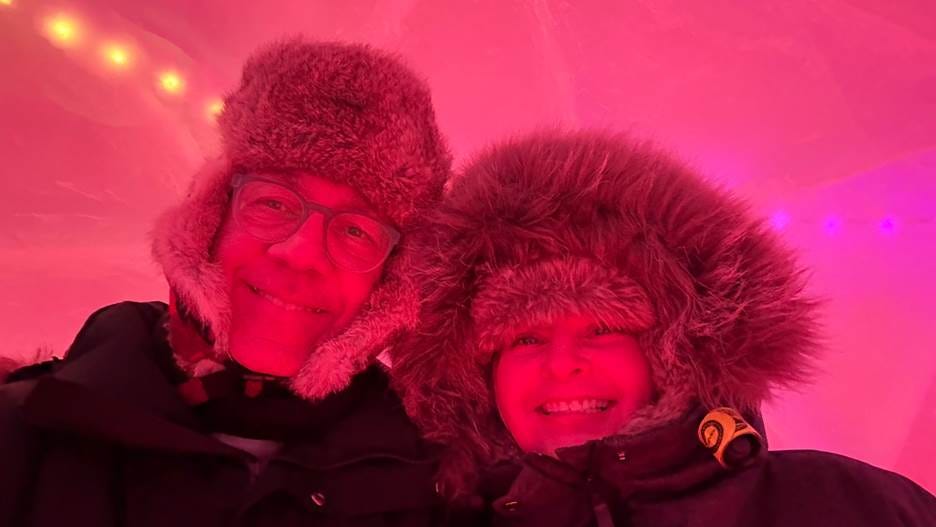
But here’s the thing they don’t tell you, the detail that no amount of gear can fix: your eyelashes freeze together. You blink, and for a moment, your eyes stick shut. You have to blink again, harder, to break the tiny ice crystals that have formed on your lashes. It’s such a small thing, such a minor inconvenience. But it’s also a reminder that no matter how prepared you are, no matter how many layers you wear or how expensive your Arctic gear is, the cold still touches you. It still finds a way in.
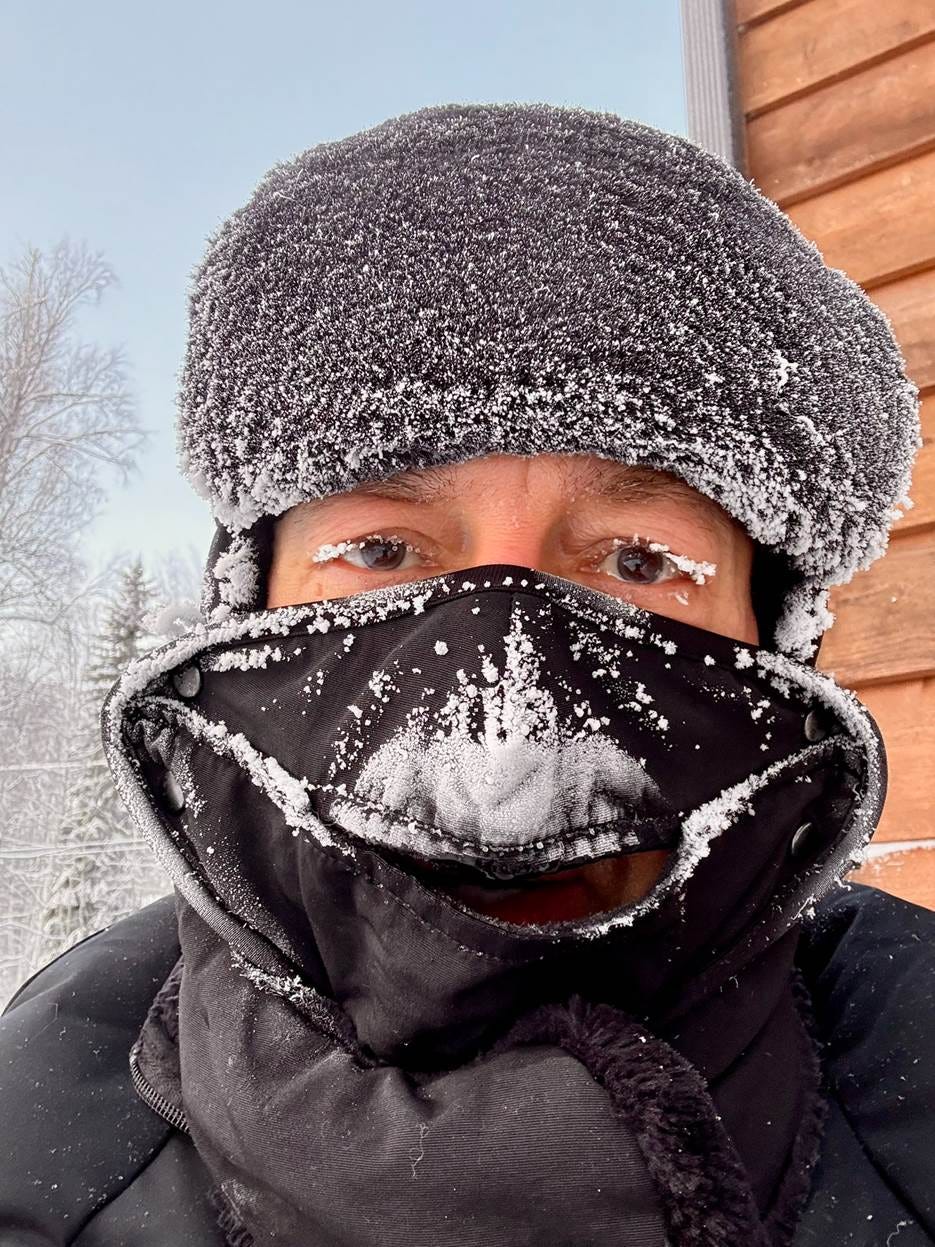
But here was the paradox: the coldest winter of my life was also the most beautiful.
Not despite the cold. Because of it.
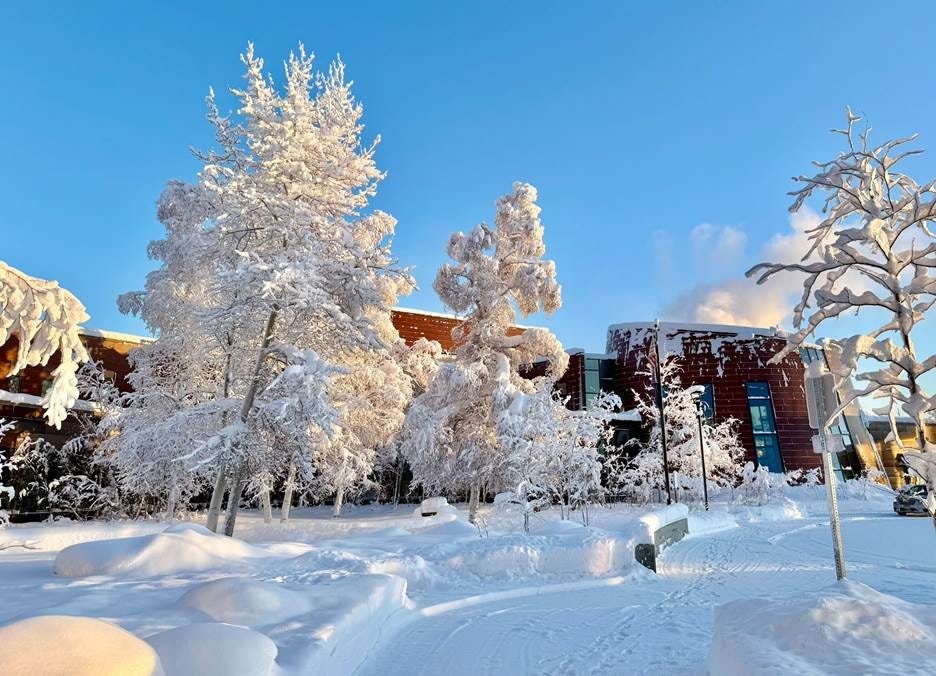
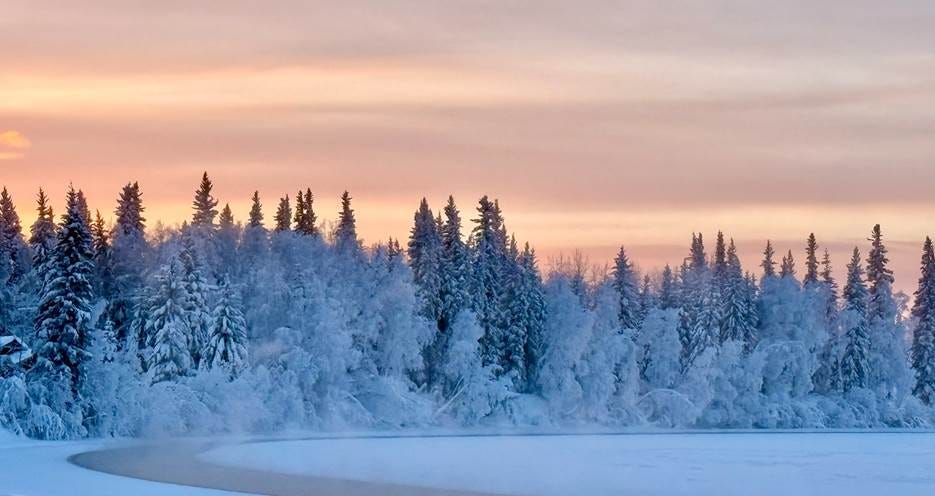
The trees become sculptures. Hoarfrost—ice crystals that form directly from water vapor in the air—coats every branch, every needle, every twig. The birches and aspens, already bare, become intricate lacework, white on white. The spruce trees turn into something from a fairy tale, each needle encased in ice, the whole tree glittering when the light hits it right.
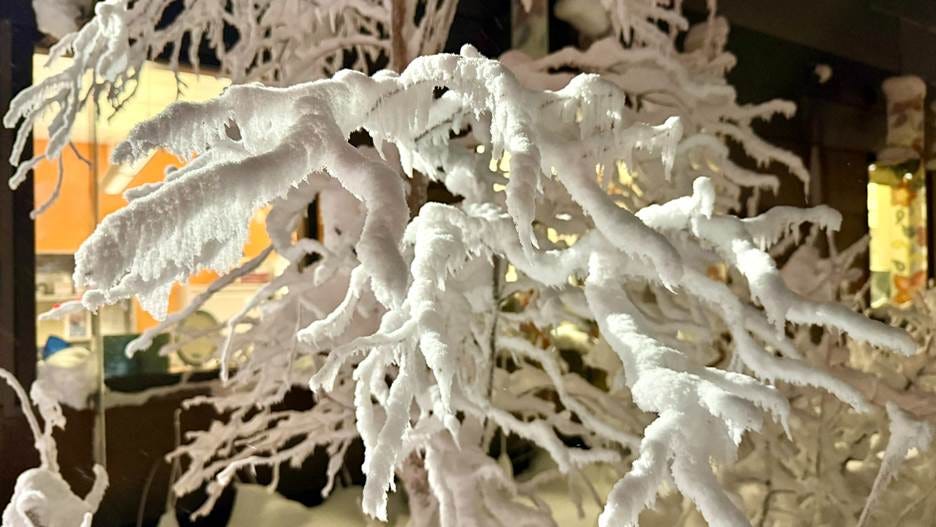
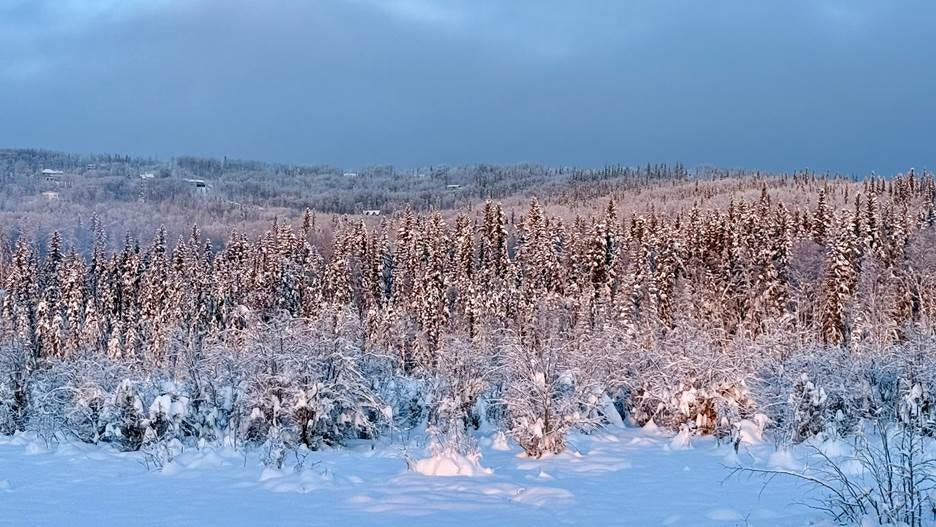
And the light. The sun never gets high in the winter sky here. It traces a low arc across the southern horizon, rising late and setting early, spending most of its brief appearance just above the mountains. That low angle does something to the light, filters it through more atmosphere, scatters it into colors you don’t see in summer. Pink. Peach. Soft gold. The whole world glows for an hour or two each day, the snow reflecting and amplifying that gentle light until everything—the trees, the hills, the frozen river—looks like it’s lit from within.
I’ve taken hundreds of photos this winter, trying to capture it. The way the hoarfrost catches the light. The way the snow creates shapes and shadows. The way the cold itself seems to clarify the air, making distant mountains look close enough to touch. But photos don’t quite get it. They can’t capture the stillness, the way sound travels differently in extreme cold, the way your breath hangs in the air like a visible thing.
And then there’s the aurora.
The northern lights appear year-round, but you can only see them in darkness, and winter provides that darkness in abundance. On clear, cold nights—and the coldest nights are often the clearest—the sky comes alive. Green curtains ripple and dance. Sometimes pink, sometimes purple, sometimes so bright it casts a glow on the snow. The aurora moves, shifts, pulses with an energy that feels almost alive, almost conscious.
People come from all over the world to see this. Fairbanks has developed a winter tourism season now, something that barely existed a decade ago. Visitors arrive from Japan, from China, from Korea, dressed in pristine Arctic gear that probably cost more than my entire winter wardrobe. They come from the lower 48—”Outside,” as Alaskans call everywhere else in America—seeking something they can’t find at home anymore.
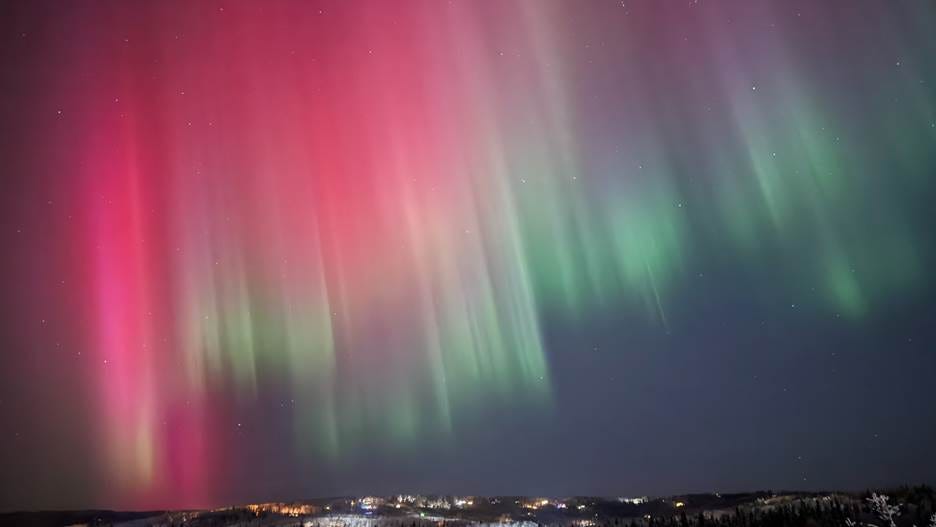
They come for the aurora, yes. But they also come for the cold itself. For the experience of -40°F, of air so cold breathing becomes a conscious act, of a kind of winter that’s becoming rarer as the planet warms. They come to dog sled across frozen lakes, to say they’ve experienced something extreme and survived it.
The city has learned to celebrate this. From mid-February through the end of March, Fairbanks hosts Ice Alaska, the World Ice Art Championships, transforming blocks of ice harvested from local ponds into massive sculptures. Artists come from around the world to carve dragons and castles, abstract forms and realistic portraits, all from ice that will melt when spring arrives. It’s temporary art, ephemeral, existing only because of the cold that makes it possible.
Kelli and I went again to the ice park this year, walking among sculptures that towered over me, their surfaces catching and refracting light in ways that seemed impossible. Families were there, kids running between the sculptures, their breath visible in the air. Tourists posed for photos, their expensive cameras protected by hand warmers tucked into their pockets. And I thought about what it means to make art from the very thing that makes life difficult, to transform the challenge into something beautiful.
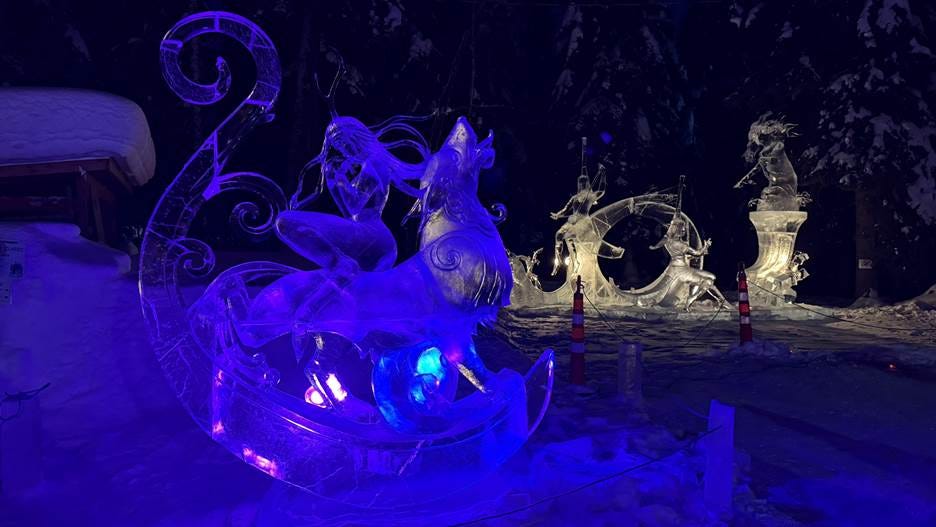
That’s what winter here asks of you, I think. Not just to endure it, but to find something in it worth celebrating. To commit to it fully—wenn schon, denn schon—and discover what emerges when you do.
Fairbanks exists mostly on flats, with the serpentine Chena River flowing through the town, with the braided Tanana River bordering the town to the south. To the north, west and east, hills rise. Cold air sinks to the lowest places in town, with temperatures varying by about ten degrees from place to place. The surrounding hills can sometime be as much as 20 to 25 degrees warmer by contrast. The “banana belt”, as a friend describes it. During extremely cold days, the air becomes still and a cold blanket, about 200-300 feet above the valley floor engulfs the town. Smoke and steam rise from chimneys— because everyone’s heating system is working overtime, because cars are left running in parking lots, because staying warm requires burning fuel. The cold freezes the moisture and it forms a pea soup thick ice fog that adds more difficulty to the driving. The city becomes visible by its heat signature, by the evidence of all the energy we’re expending just to maintain a temperature that allows human life.
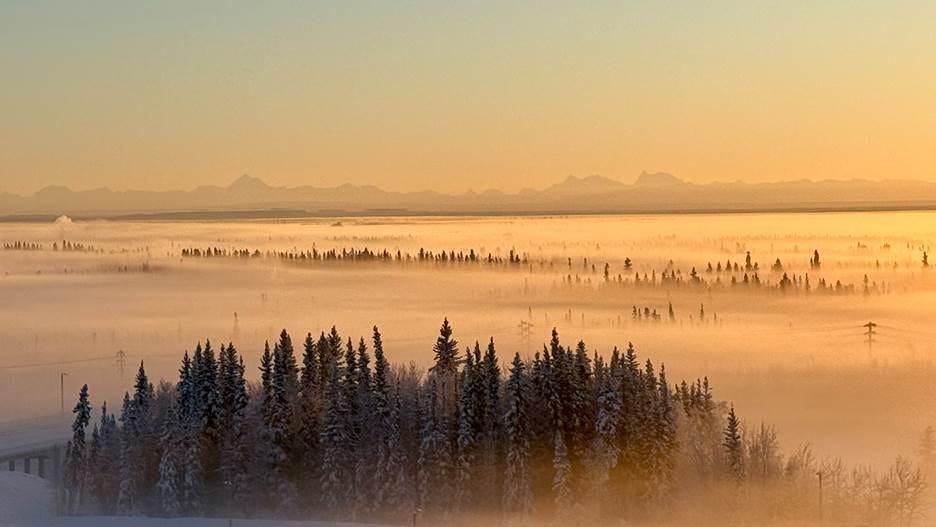
It’s humbling, in a way. We like to think we’ve conquered nature, that our technology has made us independent of the elements. But winter here strips that illusion away. We’re dependent. Vulnerable. One power outage, one failed heating system, and we’re in real danger. The cold doesn’t care about our technology. It doesn’t care about our plans or our comfort or our sense of how things should be.
And yet.
And yet, there’s something about living through this that feels important. Essential, even. Maybe it’s the way it forces you to pay attention, to be present, to notice things you’d otherwise miss. The exact quality of light at 2 PM on a January afternoon. The sound of ice cracking on the river. The way your dog’s fur collects frost on a morning walk, turning her into a small, mobile snow sculpture.
Or maybe it’s the way it teaches you about paradox, about holding two truths simultaneously. Yes, this is hard. Yes, machines break and eyelashes freeze and there are days when going outside feels like an act of courage. And yes, this is also beautiful. Unparalleled, even. The hoarfrost and the low light and the aurora and the ice sculptures and the particular quality of stillness that only comes with extreme cold.
I think about the tourists who come here, seeking this experience. I think about what they’re looking for—maybe a kind of authenticity, a connection to something real and unmediated. In a world that’s increasingly climate-controlled, where we can avoid discomfort with the turn of a dial, there’s something compelling about a place that refuses to be comfortable, that demands you meet it on its own terms.
But I also think about the people who live here year-round, who don’t have the option to leave when it gets hard. The people in Northway who experienced -70°F, a temperature so extreme it’s hard to comprehend. The people in the villages, in the remote cabins, in the places where “plug in your car” isn’t an option because there’s no electricity to plug into. They know something about wenn schon, denn schon that I’m still learning. They know what it means to commit fully to a place, to a life, to a season that doesn’t compromise.
This winter—this record-breaking, coldest-since-1904 winter—has taught me something about that commitment. About what it means to choose a place and let it change you. About finding beauty not despite the hardship but woven through it, inseparable from it.
Because that’s the thing about extreme cold: it creates the conditions for extreme beauty. The hoarfrost only forms at certain temperatures. The aurora is most visible in the darkest, coldest months. The ice sculptures exist only because the air is cold enough to preserve them. The pink and peach light comes from the sun’s low angle, which only happens in winter this far north.
You can’t have one without the other. The beauty and the harshness are the same thing, viewed from different angles.
So yes, my eyelashes freeze together. Yes, there are mornings when stepping outside feels like stepping into a physical force that wants to push you back inside. But there are also mornings when the world is so beautiful it stops me in my tracks. When the light is so perfect I have to photograph it, even though I know the photo won’t capture it. When the aurora dances overhead and I stand in the cold, neck craned back, watching until my fingers go numb.
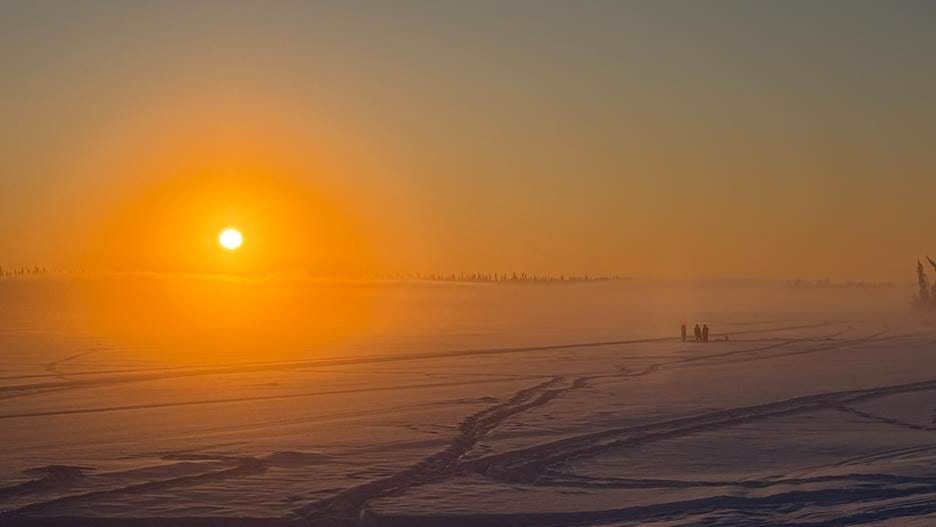
Wenn schon, denn schon. If you’re going to do winter, do it all the way. Don’t hold back. Don’t wish you were somewhere else. Be here, fully, in the cold and the beauty and the strange, luminous paradox of a season that breaks machines and creates art from ice.
That’s what this winter taught me. That’s what the coldest winter in 120 years and in my 66 years on the planet has given me—not just survival, but a kind of wonder. A reminder that the most challenging experiences often contain the most beauty, if you’re willing to look for it. If you’re willing to commit.
The snow will melt eventually. Break-up will come, messy and muddy and welcome. The rivers will thaw, the days will lengthen, the temperature will climb above freezing and stay there. Summer returns, as it always does, and with it the midnight sun and the green explosion of growth and the mosquitoes that make Minto Flats nearly impassable.
The deep cold. The long dark. The beauty. The season that demands everything and gives back something you can’t quite name but can’t deny. Something that shows up in photographs as light on snow, as ice crystals on branches, as luminous colored curtains in a black sky.
Something beautiful. Unparalleled, even.
Wenn schon, denn schon.
Thanks for the post, Dr. Brumage. Nice to learn more about Alaska.